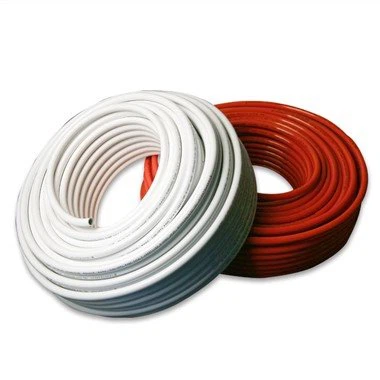
Aluminum Plastic Composite Pipe

Why Choose Us

High quality

All of our pipe is capable of being ultrasonic tested providing you with less downtime and cost savings VS.

Innovation

We are dedicated to improving our systems continually, ensuring that the technology we offer is always cutting edge.

Competitive price

We have professional sourcing team and cost accounting team, stive to reduce cost and profit and provide you a good price.

24H online service

Our customer support team is available 24/7 to answer any questions or concerns you may have.


What is a Aluminum Plastic Composite pipe


It is a new type of pipeline which is composed of a longitudinally welded aluminum tube in the middle, polyethylene plastics of inner and outer layers, and hot melt adhesive between layers. Polyethylene is a non-toxic, odorless plastic with good impact resistance, corrosion resistance and weather resistance.


Benefits of Aluminum Plastic Composite pipe

PERT EVOH Pipe

Corrosion resistant

Aluminum plastic composite pipe is highly resistant to corrosion, making it ideal for use in a variety of applications, including hot and cold water supply systems, heating systems, and gas pipelines.

PB Pipe

Lightweight

The aluminum in the composite pipe provides strength and durability, while the plastic makes it lightweight, making it easy to transport and install.

DIN 8077/8078 PPR Pipe

Thermal conductivity

Aluminum plastic composite pipe has good thermal conductivity, making it ideal for use in heating systems. The pipe can transfer heat efficiently, which helps to ensure that the system operates at maximum efficiency.

Pert Type II Pipe

Flexibility

The plastic layer in the composite pipe provides flexibility, allowing the pipe to bend and twist without breaking. This makes it ideal for use in areas where there are many turns and bends.

PE-AL-PE Pipe

Low maintenance

Aluminum plastic composite pipe is very low maintenance, requiring minimal upkeep over its long lifespan. The pipe is highly resistant to scaling and corrosion, and it requires very little cleaning or maintenance.

5 Way Manifold

Cost effective

Aluminum plastic composite pipe is a cost-effective solution for many applications because it is relatively inexpensive to produce and install. The lightweight design also makes it easy to transport and install, reducing labor costs.

Types of Aluminum Plastic Composite pipe


5 Way Manifold


01

Aluminum plastic composite pipe

The aluminum-plastic composite pipe is a five-layer pipe with a layer of welded aluminum alloy in the middle, a layer of polyethylene on the inside and outside, and a glued layer. It has the advantages of good corrosion resistance of polyethylene plastic pipes and high pressure resistance of metal pipes.

DIN 8077/8078 PPR Pipe


02

Steel plastic composite pipe

Steel-plastic composite pipes are based on seamless pipes and welded steel pipes, and the inner wall of the pipe is coated with high adhesion, anti-corrosion, food-grade hygienic polyethylene powder coating or epoxy resin coating. There are also some steel-plastic composite pipes that are made of UPVC plastic with a certain thickness on the inner wall of the galvanized pipe.

Pert Pipe


03

Aluminum alloy plastic lined composite pipe

The outer pipe of the aluminum alloy-lined plastic composite pipe is an aluminum alloy pipe, and the inner pipe is a thermoplastic plastic pipe. The outer aluminum alloy not only functions as an oxygen barrier, but more importantly, plays a structural bearing role. Suitable for domestic hot and cold water pipes, divided into hot and cold separate types and hot and cold universal types.

DIN 8077/8078 PPR Pipe


04

Plastic coated steel pipe

Plastic-coated steel pipes are made by melting a layer of polyethylene PE resin, ethylene-acrylic acid copolymer EAA, epoxy EP powder, non-toxic polypropylene PP or non-toxic polyvinyl chloride PVC and other organic substances on the inner wall of the steel pipe with a thickness of 0.5 ~ 1.0mm. Internally coated plastic composite steel pipes made by preheating internal coating or internal coating leveling process.


Components of Aluminum Plastic Composite pipe


PPR Conjoined Female Elbow

Inner layer

It is made up of a high-density polyethylene (HDPE) which gives it excellent chemical resistance and prevents rust.

PPR Ball Valve

Middle layer

The middle layer is made up of an aluminum layer that serves as a barrier between the inner and outer layers. It provides excellent heat resistance and makes the pipe impervious to oxygen, preventing corrosion.

PPR Thermostatic Valve

Outer layer

The outer layer is made up of another HDPE layer that provides additional protection to the pipe. It is UV-resistant and gives the pipe a smooth surface that makes it easier to install.


Application of Aluminum Plastic Composite pipe
 

Water supply and heating systems

Aluminum plastic composite pipes are extensively used in water supply and heating systems. They offer excellent resistance to corrosion, thermal contraction and expansion, and creep. They are also safe and hygienic to use for drinking water.


Gas supply systems

Aluminum plastic composite pipes are also used in gas supply systems due to their high safety, high pressure resistance, and excellent gas barrier properties. They are ideal for use in residential, commercial, and industrial gas supply systems.


Industrial piping systems

Aluminum plastic composite pipes are suitable for use in industrial piping systems such as chemical plants, oil refineries, and power plants. They are resistant to chemicals, acids, and other harsh environments which makes them ideal for industrial use.


Medical gas supply systems

Aluminum plastic composite pipes are also used in medical gas supply systems such as oxygen, nitrogen, and carbon dioxide supply. They are hygienic, durable, and safe which makes them suitable for this application.


Underfloor heating

Aluminum plastic composite pipes are used in underfloor heating systems due to their thermal conductivity and durability. They offer faster and more even heating than traditional radiators, making them an energy-efficient option for heating homes and buildings.


Solar and geothermal piping systems

Aluminum plastic composite pipes are also used in solar and geothermal piping systems because of their excellent resistance to high temperatures and harsh conditions.


Process of Aluminum Plastic Composite pipe


HDPE Pipe

Extrusion

The first step is the extrusion of the inner and outer layers of the composite pipe. The aluminum layer is extruded onto a plastic core, which forms the inner layer of the composite pipe.

PEX-AL-PE Pipe

Bonding

The next step involves bonding the inner and outer layers together. A special adhesive is applied to the surface of the plastic core, and the aluminum layer is then wrapped around it. The layers are then bonded together under high pressure and temperature.

3 Way Manifold

Shaping

Once the bonding is complete, the composite pipe can be shaped and cut to the required length. This is done using specialized cutting machines that are designed to work with the composite material.

PPR-AL-PERT Pipe

Testing

The final step in the process is to test the composite pipe for quality and performance. The pipe is tested for strength, durability, and resistance to pressure and temperature changes.


How to maintain Aluminum Plastic Composite pipe
 
1

Regular cleaning: Clean the pipe regularly with a soft cloth or sponge and gentle soap. Avoid using harsh chemicals or abrasive materials that can damage the surface of the pipe.

2

Inspect for leaks: Check the pipe for any signs of leaks or damage. If there is a leak, address the issue immediately to prevent further damage.

3

Avoid exposure to extreme temperatures: Avoid exposing the pipe to extreme temperatures, as this can cause expansion or contraction of the pipe, leading to leaks or other damage.

4

Maintain proper water pressure: Ensure that the water pressure is within the recommended range for the pipe to prevent damage.

5

Proper installation: Ensure that the pipe is properly installed, with the right fittings and connections.

6

Check for corrosion: Check for any signs of corrosion or degradation of the pipe. If there are any signs, replace the pipe immediately.

7

Professional maintenance: Have a professional plumber inspect the pipe periodically to ensure that it is in good condition and functioning properly.


What you should know when use Aluminum Plastic Composite pipe
 
Note 1

Firstly, it is essential to understand the specific application requirements and limitations of APC pipes. While they are suitable for a wide range of applications, including plumbing, heating, and cooling systems, they may not be suitable for high-pressure or high-temperature applications. It is crucial to consult the manufacturer's guidelines and determine the pipe's maximum operating pressure and temperature to prevent any potential failures or safety hazards.

Note 2

Secondly, proper installation techniques are vital for the performance and longevity of APC pipes. The pipes should be cut to the required length using appropriate tools, such as a pipe cutter, to ensure clean edges and a tight fit. Care should be taken to avoid the introduction of any contaminants into the pipe, as they can reduce the flow rate and affect water quality.

Note 3

Additionally, it is important to use compatible fittings and connectors specifically designed for APC pipes. These fittings should be properly tightened to prevent leaks or pipe separations. It is recommended to use metal or brass fittings, as they provide better strength and durability compared to plastic fittings.

Note 4

Furthermore, APC pipes should be protected from excessive exposure to direct sunlight or extreme weather conditions. Ultraviolet (UV) rays can degrade the plastic layer of the pipe, leading to brittleness and potential leaks. To avoid this, it is advisable to install the pipes in shaded areas or use UV-resistant covers or insulation.

Note 5

Regular maintenance and inspection are also necessary to ensure the optimal performance of APC pipes. Periodically checking for leaks, corrosion, or any signs of damage can help in identifying potential issues before they escalate. Additionally, flushing the pipes to remove any accumulated sediments or debris is recommended to maintain the flow rate and prevent clogging.


How to Choose Aluminum Plastic Composite pipe


Consider the Application: The first step in selecting the appropriate aluminum plastic composite pipe is to assess the application it will be used for. Determine whether it will be used for hot water systems, cold water systems, or both. This is important because different pipes have varying temperature and pressure ratings.

Material Composition: Aluminum plastic composite pipes are made up of multiple layers. The inner core is typically made of cross-linked polyethylene (PEX) or polybutylene (PB), while the outer layer is made of aluminum. It is essential to consider the quality and thickness of each layer to ensure maximum durability and performance.

Size and Diameter: The size and diameter of the pipe play a significant role in determining its flow rate and capacity. Evaluate the required water flow rates in your plumbing system to determine the appropriate diameter of the aluminum plastic composite pipe. The most commonly used sizes are 16mm, 20mm, 25mm, and 32mm.

Pressure Rating: The pressure rating indicates the maximum pressure that the pipe can withstand without leaking or bursting. It is crucial to select a pipe with a pressure rating that suits your plumbing system's requirements. The pressure rating is usually indicated on the pipe and can vary between manufacturers.

Certification: Always choose aluminum plastic composite pipes that meet national and international quality standards. Look for certifications such as ISO 15875 and NSF/ANSI 14/61, which ensure the product's safety and reliability. Certified pipes have undergone rigorous testing to guarantee their performance and suitability for plumbing applications.

Installation Method: Consider the installation method of the aluminum plastic composite pipe. Some pipes require specialized fittings and tools for installation, while others can be easily connected using compression or push-fit fittings. Choose a pipe that aligns with your preferred installation method and is compatible with your existing plumbing system.

Cost: While cost should not be the sole determining factor, it is essential to consider the overall cost of the aluminum plastic composite pipe. Compare prices from different manufacturers and suppliers, but remember that quality should not be compromised for a lower price. Investing in a high-quality pipe will ensure longevity and reduce the need for costly repairs or replacements in the future.


Certifications
 
productcate-800-541
productcate-800-549


Our Factory

With annual productivity over 10000 tons, China Amico Plastic Industry Inc. mainly produce plastic aluminum pipe, PP-R pipe, PE-RT pipe, HDPE pipe, PE-RT heating pipe series, brass adapter etc. Amico been awarded the title of Name-brand frequently and acquired ISO9001 and ISO14001 certificate. As early as 2004, Amico plastic aluminum pipe and PP-R pipe were titled as "Chinese best seller brand" Amico pipes and fittings enjoy high praise from home and abroad. So far, the company domestic sale network spreads more than 20 provinces. Meanwhile, the products are popular in various countries, such as Russia, the Phillipines, Chile, Indonesia etc.

productcate-675-506


Frequently Asked Questions Aluminum Plastic Composite pipe
 

Q: What are the advantages of composite pipes?

A: Composite pipes have a smooth interior surface, needing less energy for the fluids to circulate. Composites offer excellent resistance against corrosive environments including soils, saltwater, H2S and chemical applications. Composite pipes last longer.

Q: What are the materials used in composite pipes?

A: Composite pipes are made from a variety of different thermoplastics, such as fibre-reinforced plastics (FRP), glass reinforced plastics (GRP), high-density polyethylene (HDPE), polyvinyl chloride (PVC), and polypropylene (PP).

Q: What is the difference between PEX and composite pipe?

A: Composite pipes, also known as PEX pipes, are made of layers of plastic and metal. They are highly flexible, making them ideal for installation in tight spaces. They are also resistant to freezing and corrosion, making them durable. CPVC pipes, on the other hand, are made of chlorinated polyvinyl chloride.

Q: How are composite pipes manufactured?

A: MAKING COMPOSITE PIPE: FILAMENT WINDING METHOD Filament winding is the process of passing fiber strands through a resin bath and then winding them under tension onto a rotating mandrel. Once the material is wound it is heated in the oven to cure it.

Q: What are the different types of composite pipes?

A: Composite Pipes are pipes that are a made from strong materials such as PVC (Polyvinyl Chloride), HDPE (High Density Polyethylene), GRP (Glass Reinforced Plastics), FRP (Fiber Reinforced Plastics) etc.

Q: What causes PEX pipe to crack?

A: Like most other plastics, PEX will become brittle if exposed to sunlight for too long and may crack under pressure. Typical exposure limit is ~30 days.

Q: What temperature is too hot for PEX?

A: For all PEX pipe and tubing, the maximum operating temperature is 200°F. No PEX should be operated at temperatures above 200°F for any length of time. The use of crosslinked polyethylene (PEX) pipe and tubing in high- temperature applications with operating temperatures above 180°F may affect the tubing's design life.

Q: What is the maximum length of PEX loop?

A: With ½" tubing a circuit length of 300' is standard, but circuits anywhere from 250' up to 350' are within the range recommended by the Radiant Panel Association. With ⅝" and ¾" tubing, 500' circuits are standard.

Q: How far do you have to support PEX horizontally?

A: Run the PEX tubing: PEX needs to be supported a minimum of every 32 inches when running horizontally. If running vertically, it should be supported every 4 to 6 feet. (These supports are critical.) The straps should be plastic or metal that is designed to work for plastic pipe.

Q: Does PEX need to be sleeved under slab?

A: PEX pipe can also be encased within a slab, which is commonly used for radiant floor heating. In cases where PEX pipe penetrates a concrete slab, it must be protected with a nonmetallic sleeve at the penetration point.

Q: What is Aluminum Plastic Composite pipe?

A: Aluminum Plastic Composite pipe, also known as PEX-Al-PEX pipe, is a type of plastic pipe consisting of an aluminum core sandwiched between two layers of plastic.

Q: What are the advantages of Aluminum Plastic Composite pipe?

A: Aluminum Plastic Composite pipe is corrosion-resistant, flexible, and easy to install. It is also highly durable and can withstand high temperatures and pressure. Additionally, it is cost-effective and more sustainable than other traditional piping systems.

Q: What are the applications of Aluminum Plastic Composite pipe?

A: Aluminum Plastic Composite pipe is commonly used in various applications such as hydronic heating and cooling systems, potable water distribution systems, compressed air systems, and hot water heating systems.

Q: Can Aluminum Plastic Composite pipes be recycled?

A: Yes, Aluminum Plastic Composite pipes can be recycled. The plastic and aluminum components can be separated and reused in different applications. This makes them an eco-friendly option for piping systems.

Q: Do composite pipes require flushing or cleaning before use?

A: Yes, composite pipes typically require flushing or cleaning before use to remove any debris, dirt, or contaminants that may have accumulated during manufacturing, storage, or transportation. This helps ensure optimal performance and longevity of the pipes.

Q: Can composite pipes be used for buried irrigation systems?

A: Yes, composite pipes can be used for buried irrigation systems. Composite pipes are known for their durability, corrosion resistance, and lightweight nature, making them an ideal choice for underground applications such as irrigation systems. These pipes are designed to handle high pressure and can withstand various weather conditions, making them a reliable option for long-term use in buried irrigation systems.

Q: Do composite pipes have a high resistance to creep rupture?

A: Yes, composite pipes generally have a high resistance to creep rupture due to the combination of materials used in their construction, such as fiberglass and resin. These materials provide excellent strength and durability, allowing the pipes to withstand high temperatures and pressures without experiencing significant deformation or failure over time.

Q: How do composite pipes handle thermal cycling?

A: Composite pipes are designed to handle thermal cycling effectively. The combination of materials used in composite pipes, such as fiberglass and resin, provides excellent thermal insulation properties. This insulation prevents heat transfer between the fluid inside the pipe and the surrounding environment, reducing the impact of thermal cycling. Additionally, the flexibility of composite pipes helps to absorb any expansion or contraction due to temperature changes, minimizing the risk of damage or failure. Overall, composite pipes are well-suited to handle thermal cycling and maintain their structural integrity in various temperature conditions.

Q: How do composite pipes perform in high-pressure applications?

A: Composite pipes generally perform well in high-pressure applications. They are designed to be lightweight, yet highly durable and strong, making them suitable for withstanding high-pressure environments. Additionally, composite pipes have excellent corrosion resistance, which further enhances their performance in high-pressure applications. Overall, their combination of strength, durability, and corrosion resistance makes composite pipes a reliable choice for use in high-pressure environments.

Q: Can composite pipes be easily repaired?

A: Yes, composite pipes can be easily repaired. Due to their design and construction, composite pipes can often be repaired using simple techniques such as patching or sealing. The lightweight nature of composite materials also makes it easier to handle and repair these pipes compared to traditional materials like metal or concrete.

As one of the leading aluminum plastic composite pipe manufacturers and suppliers in China, we warmly welcome you to wholesale customized aluminum plastic composite pipe made in China here from our factory. All our products are with high quality and competitive price.

Brass Faucet Hose Fittings, polyethylene pipe, Brass Elbow

(0/10)

clearall