Call Us: +86-574-86590890Email: emilyyea@amico.cn
enLanguage

PPR Pipe System

Why Choose Us

High quality

All of our pipe is capable of being ultrasonic tested providing you with less downtime and cost savings VS.

Innovation

We are dedicated to improving our systems continually, ensuring that the technology we offer is always cutting edge.

Competitive price

We have professional sourcing team and cost accounting team, stive to reduce cost and profit and provide you a good price.

24H online service

Our customer support team is available 24/7 to answer any questions or concerns you may have.


What is a PPR Pipe System


PPR pipes (Polypropylene Random Copolymer pipes) are a type of plastic pipe made from a blend of polypropylene and ethylene copolymers. PPR is a high-technology plastic pipe, which is modern plumbing's important solution when matched to cold galvanized pipes for all hot water systems.

First 12 Last 1/2


Benefits of PPR Pipe System

PPR Ball Valve with Strainer

Corrosion resistant

PPR pipes are highly resistant to corrosion and chemical attacks, making them ideal for industrial applications where corrosive fluids and chemicals are present.

PPR Male Union Ball Valve

High temperature resistance

PPR pipes can withstand high temperatures up to 90°C, which makes them suitable for industries that require high-temperature fluids or processes.

PPR Stop Valve

Low thermal conductivity

PPR pipes have low thermal conductivity, which means they can maintain a consistent temperature and help reduce energy losses.

PPR Thermostatic Valve

Easy to install

PPR pipes are lightweight, easy to handle and install, and can be joined using heat fusion or mechanical fittings.

PPR Ball Valve

Long lasting

PPR pipes have a lifespan of up to 50 years or more, which makes them a cost-effective solution for industries.

PPR Female Union

Environmentally friendly

PPR pipes are made from non-toxic materials and are fully recyclable, making them an environmentally friendly option.

Types of PPR Pipe System
DIN 8077/8078 PPR Pipe
Pert Pipe
PE-AL-PE Pipe
PE 80 Pipe

1.PPR elbow:PPR elbow is usually used to change the direction of the pipe to adapt it to different pipe layouts. They can be used in water supply and heating systems to ensure that pipes can smoothly go around obstacles or connect to different equipment.

2.PPR equal diameter tee:PPR equal diameter tee is used to divert pipeline flow and is usually used when branch pipes need to be connected to the main pipe. This helps maintain balance and proper functioning of the system.

3.PPR reducing tee:PPR reducing tee allows the connection of pipes of different diameters and is usually used to connect smaller pipes with larger pipes to meet the flow requirements of different parts.

4.PPR pipe caps:PPR pipe caps are used to seal the ends of pipes to prevent water leakage or dust from entering the duct system. They can also be used for manhole covers.

5.PPR pipe joint:PPR pipe joint is used to connect two pipes. They are available in different types including straight connectors, female connectors and male connectors, which can be selected according to specific needs.

6.PPR pressure reducing valve:PPR pressure reducing valves are used in piping systems to help maintain proper water pressure. This is essential for pressure management in water and heating systems.

7.PPR valve:PPR valve is used to control the flow of flowing media. They can be divided into different types such as ball valves, gate valves, butterfly valves, etc. and are suitable for different applications such as closing, regulating or diverting.

8.PPR quick connector:PPR quick connector is a convenient and fast way to connect pipelines, usually used in situations where frequent disassembly and replacement of pipeline components is required.


Material of PPR Pipe System

Polypropylene (PP)

it is the primary raw material used in the PPR pipe system. Polypropylene is a thermoplastic polymer that offers high strength, durability, and resistance to chemical, aqueous, and thermal degradation.

Random copolymers

Random copolymers are mixed with polypropylene to enhance the strength, flexibility, and impact resistance of the PPR pipe system.

Stabilizers

PPR pipes are made with stabilizers to prevent degradation due to exposure to UV light, temperature, and pressure changes.

Additives

PPR pipes contain additives such as lubricants and anti-static agents to enhance the performance and ease of installation.


Application of PPR Pipe System
productcate-600-300
 

Hot and cold water supply systems

PPR pipes are widely and equally used for hot and cold water supply systems in residential, commercial, and industrial buildings. They can withstand high temperatures and pressure and can distribute heat evenly which makes them ideal for transporting water in such systems. They are also used in heating systems such as under-floor heating etc.

productcate-600-300
 

Chemical and fluid transport

As we know that PPR pipes are resistant to corrosion which makes them most suitable for transporting chemicals and fluids in industrial processes.

productcate-600-300
 

Agricultural Irrigation application

PPR pipes are extensively used for irrigation systems in the agriculture sector due to their durability and resistance to chemicals.

productcate-600-300
 

Infrastructure

PPR pipes are also used in infrastructure projects like sewage systems, drainage systems, and cable conduits. These pipes' resistance to corrosion and abrasion makes them ideal for such applications.

productcate-600-300
 

Transporting fluids and chemicals

PPR pipes are used in transporting fluids and chemicals in industrial processes.Summarily, it can be concluded that these pipes are a versatile and durable option for a wide range of piping applications.


Process of PPR Pipe System


1.Raw material preparation:The first step is to prepare the raw materials, which include Polypropylene Random Copolymer (PP-R) resin, stabilizers, antioxidants, and colorants. These materials are blended in the right proportions to obtain the desired quality of pipes.

2.Extrusion:The prepared materials are then fed into an extruder. The extruder melts the materials and mixes them thoroughly. The molten materials are then passed through a die, which gives them the desired shape and size.

3.Cooling:The extruded pipes are cooled down to room temperature to obtain the required tensile strength and flexibility.

4.Cutting:The cooled pipes are then cut into the desired lengths using a cutting machine.

5.Socket fusion welding:The pipes and fittings are joined together through socket fusion welding. The surfaces of the pipes and fittings are heated with a socket fusion welding machine to a specific temperature. Once heated, the pipes and fittings are pressed together to form a tight and strong joint.

6.Testing:The PPR pipe system is then tested to check for any leakage, durability, and resistance to pressure and temperature. The testing ensures that the pipes and fittings meet the required quality standards.

7.Packaging and shipping:The final products are then packaged and shipped to various locations for use in plumbing and heating systems.

 
How to maintain PPR Pipe System
 
01/

Ensuring proper lnsulation
Proper insulation is crucial for PPR pipe fittings, especially in cold climates. Insulate the pipes and fittings in areas exposed to low temperatures to prevent freezing and potential damage.

02/

Prevent pipeline overload
Once the PPR pipeline is overloaded, it is easy to cause pipeline rupture and water leakage. Therefore, in daily use, it is necessary to pay attention to the load of the pipeline and avoid overuse and overload. Especially in the case of large water flow and high temperature, more attention should be paid to avoid overloading.

03/

Regularly clean the pipeline
What needs to circulate in the PPR pipeline is clean water, so even if it is clean water, the pipeline will become dirty after a period of use. Therefore, it is necessary to clean the pipeline regularly. It can be cleaned by using a pipe cleaning machine, spraying cleaning agent, etc. During the cleaning process, attention should be paid to the tightness of the pipe to avoid wear and tear.

04/

Prevent contact with chemicals
The contact between some chemicals and PPR pipe materials will produce chemical effects, which will also affect the service life of the pipe. Therefore, placing chemicals, acid and alkali substances, etc. around the pipeline should be avoided.

05/

Prevent mechanical damage
Although the PPR pipe material has high hardness and good toughness, it still cannot avoid the risk of mechanical damage. Pay attention to avoid scratches, collisions, etc. during transportation, installation, and use. In addition, in the direct prevention of excessive bending of the pipe (under half the inner diameter of the pipe), the use of threaded joints that are too small (especially tees and above) should also be avoided.

06/

Periodic inspection
In addition to regular cleaning of the pipes, regular inspections of the pipes are also required. Mainly observe whether there are cracks, damage, deformation, etc. on the surface of the pipeline, and deal with it in time to prevent accidents such as water leakage. In general, check at least once a year.


Components of PPR Pipe System
 
Step 1

The first component is the PPR pipes themselves. These pipes are made of high-quality polypropylene random copolymer material, which provides excellent resistance to pressure, temperature, and chemicals. The pipes are available in different sizes and lengths to accommodate various system requirements. They are lightweight, easy to handle and install, and have a smooth inner surface that minimizes friction and ensures a continuous flow of fluids.

Step 2

Another important component of the PPR pipe system is the fittings. These fittings are used to connect, redirect, and control the flow of fluids within the piping system. PPR fittings are made from the same material as the pipes, ensuring compatibility and a strong joint. They come in various shapes and sizes, including elbows, tees, couplings, and reducers, to accommodate different piping configurations.

Step 3

To join the PPR pipes and fittings together, a fusion welding technique is used. This involves the use of a PPR welding machine, which heats the pipe and fitting ends to melting point. The melted ends are then pressed together, creating a strong and leak-proof connection. Fusion welding ensures a seamless joint that is resistant to corrosion and eliminates the need for additional sealing materials.

Step 4

To support the PPR pipe system and ensure its stability, brackets and hangers are used. These components secure the pipes in place and prevent sagging or movement. Brackets are typically placed at regular intervals along the piping system, while hangers are used for vertical sections. They are usually made of metal or plastic and are designed to withstand the weight of the pipes and the fluids being transported.

Step 5

In addition to the primary components, the PPR pipe system may also include other accessories such as valves, pressure gauges, and control devices. Valves are used to control the flow rate and shut off the fluid flow when necessary. Pressure gauges monitor the pressure inside the piping system, allowing for timely adjustments or troubleshooting. Control devices, such as flow meters or temperature sensors, are used to regulate and optimize the system's performance.


How to Choose PPR Pipe System


Step 1: It is crucial to assess your specific plumbing needs. Consider the type of building or structure where the PPR pipe system will be installed, the intended use of the plumbing system, and the expected water pressure and temperature requirements. Understanding these factors will help you determine the appropriate diameter and thickness of the PPR pipes.

Step 2: Next, consider the quality and reliability of the PPR pipes. Look for pipes that are manufactured by reputable companies with a proven track record in the industry. Pay attention to the material used in the production of the pipes and ensure that it meets the necessary standards and certifications. A high-quality PPR pipe system will not only perform well but also have a longer lifespan, reducing the need for frequent repairs or replacements.

Step 3: Consider the ease of installation and maintenance of the PPR pipes. Choose pipes that are lightweight and easy to handle, as this will simplify the installation process and reduce labor costs. It is also important to select pipes that are resistant to corrosion, scaling, and chemical damage, as this will minimize the need for regular maintenance and increase the longevity of the system.

Step 4: Consider the cost-effectiveness of the PPR pipe system. While it may be tempting to opt for the cheapest option, it is essential to balance the upfront cost with the long-term benefits. Investing in a high-quality PPR pipe system may cost more initially but can save you money in the long run by reducing maintenance and repair expenses.

Step 5: Seek professional advice and consult with plumbing experts. They can assess your specific requirements, recommend suitable PPR pipe system options, and provide valuable insights based on their experience. Their expertise will help ensure that you make an informed decision and choose a PPR pipe system that meets your needs and expectations.


Certifications


productcate-800-541
productcate-800-549


Our Factory

With annual productivity over 10000 tons, China Amico Plastic Industry Inc. mainly produce plastic aluminum pipe, PP-R pipe, PE-RT pipe, HDPE pipe, PE-RT heating pipe series, brass adapter etc. Amico been awarded the title of Name-brand frequently and acquired ISO9001 and ISO14001 certificate. As early as 2004, Amico plastic aluminum pipe and PP-R pipe were titled as "Chinese best seller brand" Amico pipes and fittings enjoy high praise from home and abroad. So far, the company domestic sale network spreads more than 20 provinces. Meanwhile, the products are popular in various countries, such as Russia, the Phillipines, Chile, Indonesia etc.

productcate-675-506


Frequently Asked Questions Aluminum Plastic Composite pipe
 

Q: What is the life expectancy of PPR pipe?

A: PPR piping systems can remain functional for over 50 years, at a wide range of fluid and environmental operating temperatures. Moreover, PPR pipe exhibits excellent durability in both hot and cold water systems.

Q: How can you tell the quality of PPR pipe?

A: PPR pipe material is polypropylene, a good pipe is no odor, and bad some of the smell, it may be in polypropylene blending sake of polyethylene, so the smell of the pipe is best not to the election. 3) Quality PPR pipe has a certain hardness, touch with your fingers, feel rather hard, not easily deformed.

Q: How do I protect my PPR pipe from sunlight?

A: However, if exposure to sunlight is unavoidable for objective reasons, the following measures can also be taken: Apply special radiation-resistant materials on the surface of the pipe; Cover exposed water pipes with black sunscreen foam; Use a dark protective layer covering and so on.

Q: Can PPR pipe be exposed to sunlight?

A: Overall, PPR pipes can be exposed to the sun, but it is important to take appropriate measures to protect them from the effects of UV radiation and excessive heat. Proper insulation and placement in a shaded area can help to minimize the effects of sun exposure and ensure the long-term durability of the pipes

Q: Does PPR pipe need insulation?

A: PPR pipes show glassy properties at 0 °C due to the material structure and the fragility of its raw material under these conditions. Thus if there is a possibility of pipes to face such conditions in the building during winter, then insulation should be used.

Q: Can I use PPR pipe for hot water?

A: One of the most common misconceptions about PPR pipes is that they are not strong enough to handle hot water. This is not true, as PPR pipes are designed to withstand high temperatures and can handle hot water up to 95 degrees Celsius.

Q: Does PPR pipes freeze?

A: The ppr tube will freeze and crack at minus 20 degrees, because the ppr tube has low temperature brittleness, which will make the ppr tube more fragile due to the drop in temperature. For example, in an environment of minus 20 degrees, the remaining water in the pipe freezes rapidly and expands in volume.

Q: How do you connect PPR pipes to fittings?

A: Welding is a popular method for connecting PPR pipes due to its strength and reliability. It involves using a special welding machine to fuse the ends of the pipes together, creating a nearly seamless connection. Welding requires a high level of skill and expertise, and is usually carried out by trained professionals.

Q: Can PPR pipes be used for gas?

A: PPR pipes can be found in the following applications: Water supply, sewage systems, gas supply (solvent-welded only), heat insulation, cold supply and cooling technology. Placing them underground is also possible due to their chemical resistance.

Q: Is PPR pipe toxic?

A: PPR pipes are made from non-toxic and food-grade polypropylene material, which ensures that the water flowing through these pipes remains safe for consumption. This material is free from harmful chemicals such as lead, cadmium, and phthalates, which are commonly found in older plumbing systems.

Q: What are the different classes of PPR pipes?

A: These are Type-1(polypropylene homo polymer), Type-2(polypropylene block copolymer) and Type-3 (Polypropylene Random copolymer). Type-3 is more performers against physical and chemical than Type-1 and Type-2.

Q: What are the two methods of joining PPR pipes?

A: Fusion Welding: pipe and fitting are welded together.
Both are made of PP-R so that no additional welding material is required.
Threaded Fittings: both Male and Female threads are available.

Q: Is PPR pipe thermoplastic?

A: PPR pipe is made from a high-quality thermoplastic polymer called polypropylene random copolymer, which has been specially designed for use in pipes and fittings.

Q: Is PPR pipe food grade?

A: Non-toxic: no heavy metal additives, our PN25 pp materials plastic food grade ppr pipe with red blue color line would not be covered with dirt or contaminated by bacterium.

Q: What color are PPR pipes?

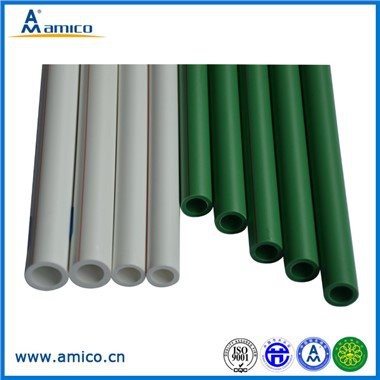
A: (PP-R pipes are mainly white, gray, green and yellow. Consumers often think that white is ppr pipe. In the best, the color is not the standard for judging the quality.

Q: How many layers are available in PPR pipes?

A: The structure of PPR pipe:
The single-layer structure is the basic structure of PPR pipes, which is made of one layer of polypropylene material. The structure has the advantages of simplicity, beautiful appearance and moderate price.

Q: How can you tell the quality of PPR pipe?

A: PPR pipe material is polypropylene, a good pipe is no odor, and bad some of the smell, it may be in polypropylene blending sake of polyethylene, so the smell of the pipe is best not to the election. 3) Quality PPR pipe has a certain hardness, touch with your fingers, feel rather hard, not easily deformed.

Q: What is the difference between green and white PPR?

A: The color and quality of PPR pipes are not necessarily related. However, there are more cases where the white PPR fails to pass the light detection, while the green does not have these problems. Green light transmittance is not as good as white, so green PPR tubes are not easy to breed bacteria.

Q: How do PPR pipes work?

A: Low Thermal Conductivity
This means that external temperatures don't get to the liquid inside the pipe. Likewise, temperature from the liquid does not escape to the external environment. This is why PPR pipes minimize heat loss or heat gain during the transfer of cold and hot fluids.

Q: How do you measure PPR pipes?

A: To find it, measure around the circumference of the pipe with flexible measuring tape. Divide the circumference by pi, or about 3.14159. For example, if the circumference is 12.57 inches (319 mm), you would divide by pi, and get an outside diameter of about 4 inches (100 mm).

As one of the leading ppr pipe system manufacturers and suppliers in China, we warmly welcome you to wholesale customized ppr pipe system made in China here from our factory. All our products are with high quality and competitive price.

Polyethylene piping system, Brass Compression Couplings, Brass hose end fittings

(0/10)

clearall